-
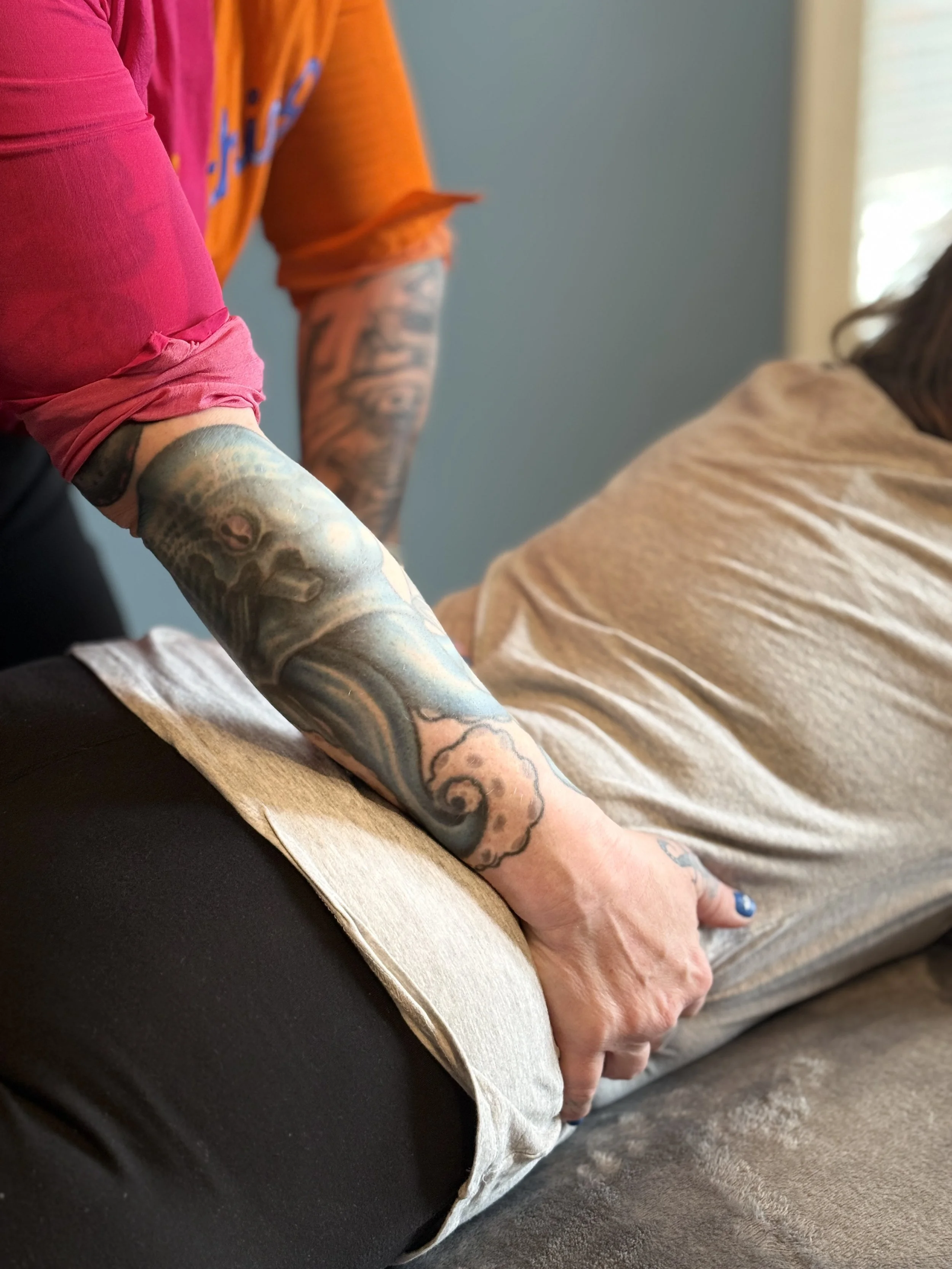
One of the key principles of Rolfing® is the concept of structural integration, which emphasizes the importance of aligning the body in relation to gravity. By addressing imbalances and asymmetries, Rolfing® seeks to create a more harmonious relationship between different parts of the body, promoting greater stability, balance, and overall well-being.
-
Rolfing® targets the body's connective tissues (fascia) to improve alignment and reduce pain, while Manual Lymphatic Drainage (MLD) is a gentle, light-touch therapy used to stimulate lymph fluid flow, reduce swelling and support immune function.
Although they are distinct techniques, I combine these approaches to enhance recovery from surgery, reduce scarring, and improve overall fluid movement in the connective tissues.
-
Rolfing® can help manage hypermobility by addressing connective tissue fragility, improving joint stability and reducing chronic pain through holistic, hands-on manipulation of fascia.
It aids in correcting movement patterns, fostering better posture, and providing deeper body awareness (proprioception) to support fragile joints.
Rather than creating more flexibility, Rolfing® focuses on creating stability in hypermobile joints (especially hips and legs) and improving overall structural alignment.
-
Rolfing® promotes relaxation by deeply manipulating connective tissue to release chronic tension, reduce stress and improve posture.
By releasing physical tension and improving alignment, Rolfing® can help calm the nervous system, assisting with stress, anxiety, and the effects of PTSD.